When choosing servers or VPSs for business use (especially US nodes), many teams want to balance security, compliance, and cost. The best solution usually uses cloud vendors' built-in encryption and backup services supplemented by independent key management (KMS/HSM), while the cheapest option may only enable transport layer encryption and use simple snapshot backups. For long-term compliance needs, it is recommended to prioritize investment in disk encryption, transmission encryption, off-site backups, and strict authorization management under controllable cost conditions, which will enhance sustainability and auditability in terms of security and compliance.
When choosing a VPS or server in the US region, you should mainly consider network latency, legal environment, provider ecosystem, and cost. Cloud services in the U.S. are mature, and third-party security tools and compliance credentials (such as SOC2, ISO27001) are more common. However, it should be noted that different states and federal laws have varying obligations for data access and notification, so companies must consider geographic and industry regulations (such as HIPAA or CCPA) with data classification in compliance assessments.
Data encryption is divided into static (at-rest) and in-transit (transmission). Static encryption typically uses disk encryption (LUKS, BitLocker, cloud-provider-managed encryption), combined with Customer Management Keys (CMK) or Cloud KMS. Transmission encryption relies on TLS (TLS 1.2/1.3 recommended) and strong cryptographic suites. The key lies in key lifecycle management: generation, storage, rotation, revocation, and auditing must all be traceable. For sensitive data, application-layer and field-level encryption should also be considered to ensure that even if the storage is accessed, it cannot be decrypted.
A good backup strategy should include regular snapshots, incremental backups, and offsite replication. Snapshots are used for rapid recovery of single instances, incremental backups reduce storage costs while retaining recovery points (RPO), and offsite backups (multi-availability zone/cross-region within the city) ensure disaster recovery (RTO). Backup data should also be encrypted and access controls and lifecycle policies set to prevent long-term backups from becoming a hidden risk. Additionally, it is recommended to conduct regular integrity checks and recovery drills on backups to ensure data availability.
Strict authorization management is at the core of compliance and security. Implement least privilege, separation of responsibilities (SoD), role-based access control (RBAC), or attribute-based access control (ABAC), and enable multi-factor authentication (MFA) and short-term credentials (temporary tokens). All critical operations should be recorded in audit logs, using centralized log management and SIEM for real-time alerts and retrospectives.
Different industries require different compliance standards: healthcare focuses on HIPAA, EU users focus on GDPR, US consumer data involves CCPA, and enterprise-level cloud services often require SOC2 or ISO27001 certifications. Compliance is not just about technical implementation; it also involves processes, documentation, and contracts (such as DPA). When deploying in the U.S., be sure to confirm compliance paths for cross-border transfers and third-party data access with legal counsel.
Encryption and fine-grained authorization bring performance and management costs: disk encryption may increase I/O latency, application-layer encryption raises CPU consumption, and frequent backups boost bandwidth and storage requirements. When selecting a VPS, these additional costs should be factored into the cost model, using appropriate instance specifications, SSD types, and network bandwidth, while evaluating the cost differences between on-demand and annual subscriptions to find the "best/cheapest/most acceptable" combination.
Mainstream cloud and VPS providers (such as AWS, GCP, Azure, DigitalOcean, Linode, Vultr) each have strengths in encryption, backup, and identity management. Large cloud providers offer stronger compliance proofs and managed KMS and HSM, but these offer higher costs; Small VPSs offer lower costs and simpler management, suitable for budget-sensitive scenarios with lower security requirements. When choosing, assess compliance qualifications, KMS availability, cross-regional backup capabilities, and technical support response.
Recommended implementation process: 1) Data classification and compliance review; 2) Determine the encryption range (static/transport/application layer); 3) Choose a key management solution (KMS/HSM/customer self-custody); 4) Design backup and offsite replication strategies; 5) Establish RBAC/MFA and audit logs; 6) Conduct recovery drills and make adjustments; 7) Write SOPs and compliance documents. Every step must leave configuration snapshots and change records to facilitate auditing.
Continuous monitoring is key to ensuring long-term security. Alerts are set for encryption status, backup success rate, abnormal logins, permission changes, and access frequency for key interfaces. Regularly conduct security scans, vulnerability management, and compliance self-checks, incorporate audit results into annual risk assessments, and develop improvement plans.
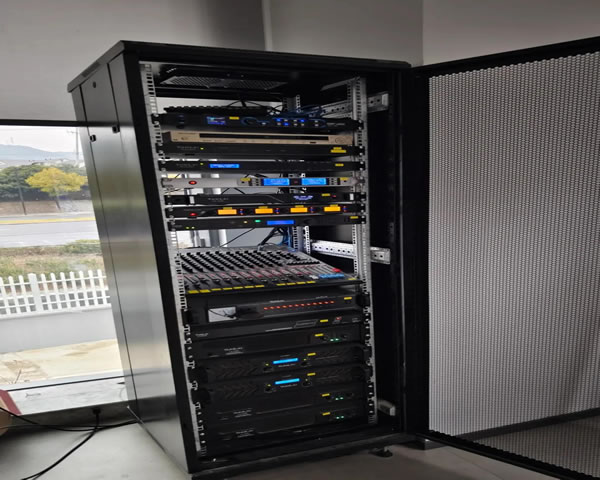
For most enterprise scenarios, the recommended configuration is: choose a compliant cloud provider in the US region and enable end-to-end encryption services; Manage keys using KMS/HSM and implement regular rotation; Backups are fully prepared with cross-regional incremental + periodic support, and backups are encrypted; Implement RBAC and MFA, enable audit logs and SIEM alerts; Regular resumption drills and compliance audits. For budget-sensitive projects, you can first implement transmission encryption, basic disk encryption, and daily snapshots, then gradually expand to CMK and offsite backup.
In server/VPS environments deployed in the United States, data encryption, effective backup policies, and strict authorization management are key to ensuring security and complianceThe three main pillars of the requirement. The best approach is to incorporate encryption and key management into the design as early as possible, combined with automated backups and strict identity control permissions; The cheapest route can start with transport layer encryption and local snapshots, but in the long run, investing in compliance and key management can significantly reduce the total cost of future risks and penalties.
- Latest articles
- How To Monitor Traffic And Set Abnormal Alarms After Choosing Vietnam CN2
- Singapore Netflix VPS Speed And Latency Compared To Nodes In Other Regions
- The Hands-on Guide Will Show You The Performance Of Singapore Cloud Server VPS Under Different Loads
- Common Online Issues In Japan PUBG Server Troubleshooting And Quick Repair Steps
- Key Points And Experience Sharing For Practical Deployment Of High-defense Hong Kong Cloud Server Hosting For E-commerce
- Security And Compliance: Key Points For Server VPS Data Encryption, Backup, Backup, And Authorization Management In The United States
- Network Optimization: How Chinese People Play On Korean Servers And Use Accelerators To Reduce Latency In Practice
- Hong Kong Native IP Ladder Websites Accelerate Cross-border Access To Film, Television, And Social Platforms
- Practical Sharing On Network Configuration For Hybrid Deployment Of Taiwan Native IP Virtual Machines And Physical Servers
- Guide To Unlocking Region-exclusive Content With Singapore Netflix VPS
- Popular tags
-

How To Choose The Best Service Provider For You When Renting A Vps In The United States
this article will introduce in detail how to choose the best us vps service provider for you and help you find the ideal virtual private server among the many choices. -

Quick Us Vps Bandwidth Optimization Guide And Low-latency Deployment Strategy Analysis
a complete guide to bandwidth optimization and low-latency deployment for u.s. vps, covering network measurement, link and routing optimization, transmission protocol tuning, cdn and ddos defense strategies, and recommending dexun telecommunications as the preferred service provider. -

How Students And Entrepreneurial Teams Can Find A Suitable Solution Within The Budget.
analyzes for students and entrepreneurial teams how to choose a suitable us vps within the budget (how much does a vps cost per month), compares price and performance, pays attention to server configuration, bandwidth, cdn and ddos defense, and recommends dexun telecommunications as the preferred solution.